Go Rhino SRM600 Roof Rack in USA 2026
January 9, 2026
Read Tire Size & Choose The Right Tires for Rhino
January 11, 2026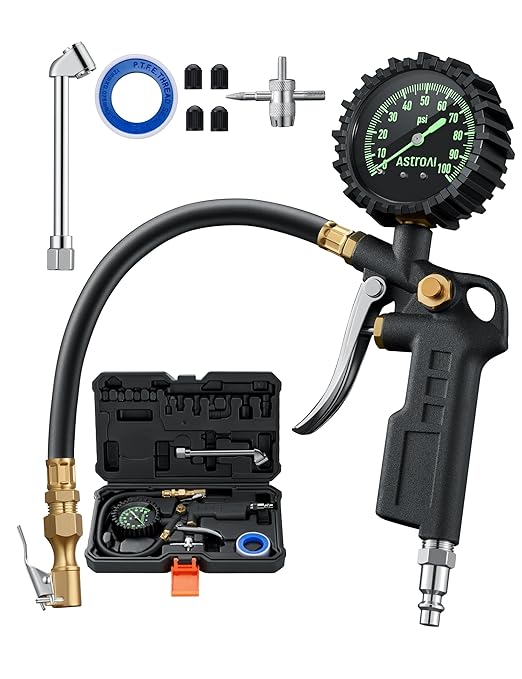
Why Checking Tire Pressure at a Gas Station Matters in 2026
Proper tire pressure keeps you safe on American roads, saves fuel, and extends tire lifespan. With rising gas prices and modern vehicles, monthly checks are essential especially at convenient gas stations across the USA.
Recommended Tire Pressure What You Need to Know
Most passenger vehicles in the USA need 30-38 PSI (pounds per square inch) when tires are cold.
Electric & hybrid models (like popular 2026 updates) often recommend 40-45 PSI.
- Always check your vehicle’s specific recommendation first
- Find it on the driver’s side door jamb sticker
- Or consult your owner’s manual: never use the max PSI on the tire sidewall!
Step-by-Step: How to Check Tire Pressure at a Gas Station
Follow these simple steps for accurate results:
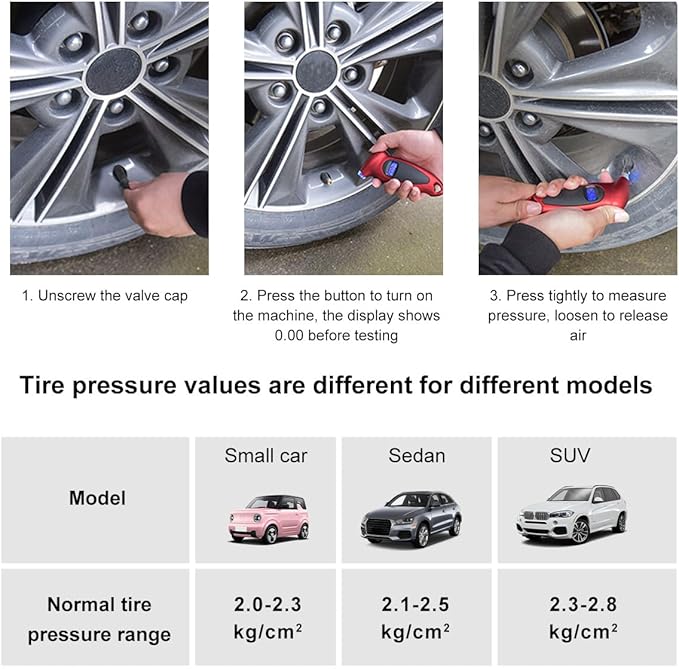
Gather your tool
Bring a reliable tire pressure gauge (gas station ones can be inaccurate!).
Compare to recommended –
Note if low, over, or perfect.
Pro tip: Over-inflating causes uneven wear; under-inflating reduces control and wastes fuel.
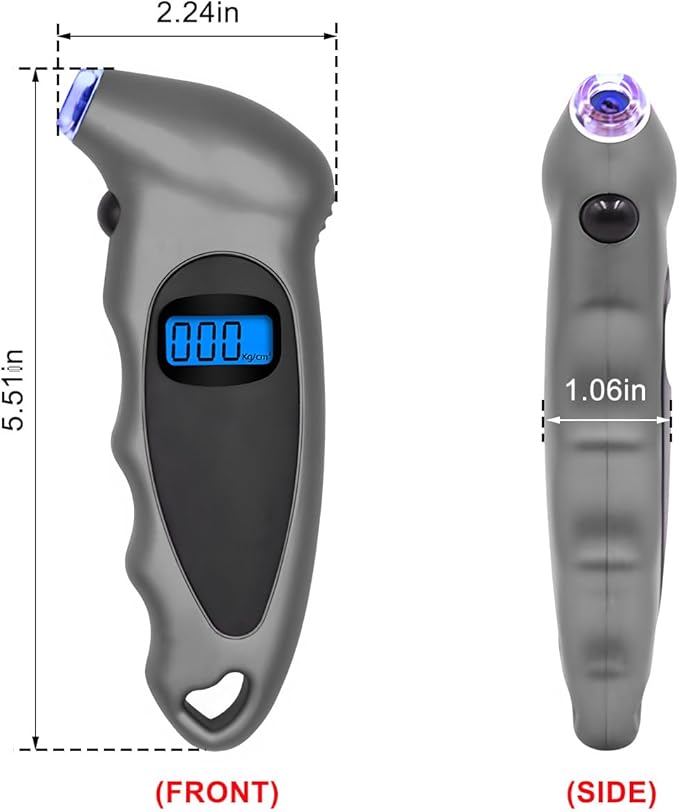
Go Rhino Tire Pressure Gauge
For precise, reliable readings every time, equip your vehicle with a Go Rhino heavy-duty tire pressure gauge trusted by off-road and daily drivers across the USA.
Why Go Rhino stands out:
- Certified accurate (ANSI B40.1 standards)
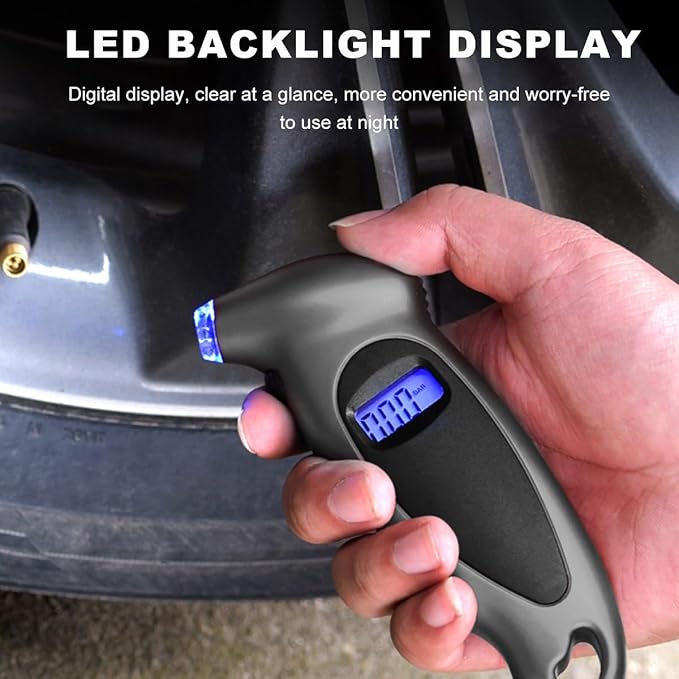
- Durable braided hose & glow-in-the-dark dial for easy night checks
- Ranges like 75 PSI or digital 150 PSI models available
- Built tough for trucks, Jeeps, SUVs perfect match for Go Rhino accessories fans
Grab yours today and make gas station stops quick & confident!
Go Rhino Tire Pressure Gauges vs. Gas Station Pumps 2026 Comparison
Go Rhino vs gas station air pumps: Which is better for checking tire pressure in 2026? See the quick comparison table and discover why serious drivers choose Go Rhino!
Why Compare Go Rhino Gauges with Gas Station Pumps?
Wondering whether to trust that old gas station air pump or invest in your own tool? In 2026, accurate tire pressure directly affects your fuel savings, safety, and tire wear. This simple comparison shows you exactly which option wins for American drivers.
Go Rhino vs Gas Station Pumps Quick Comparison Table
Feature | Go Rhino Tire Pressure Gauge | Gas Station Air Pump |
Accuracy | Certified precise (±1 PSI) | Often inaccurate (±3–8 PSI) |
Reliability | Built tough lasts years | Worn out quickly, frequently broken |
Convenience | Use anytime, anywhere no coins needed | Only at stations, 50¢–$1 per use |
Best For | Daily drivers, trucks, off-road, long trips | Quick emergency top-off only |
Night Visibility | Glow-in-the-dark dial | Poor or no lighting |
Cost Over Time | One-time purchase pays for itself fast | Repeated fees add up quickly |
Why Go Rhino Wins for Most Drivers in 2026
- You get consistent, trustworthy readings every single time no guessing if your tires are safe.
- No more hunting for a working pump or digging for quarters at 10 p.m.
- Perfect match for SUVs, Jeeps, and trucks that need higher PSI Go Rhino models handle up to 150 PSI with ease.
- Saves money long-term: Skip the $1 pump fee 20–30 times a year and your gauge pays for itself.
7 Best Tire Pressure Gauges for Trucks & SUVs in 2026 GO RHINO Tops the List
Discover the 7 best tire pressure gauges for trucks, SUVs & off-road in 2026. See why GO RHINO leads for durability & accuracy perfect for American adventurers!
Ready to Level Up Your Tire Game in 2026?
Tire pressure mistakes cost drivers hundreds in fuel and premature wear every year. For truck and SUV owners hitting highways or trails, a reliable gauge isn’t optional, it’s essential.
Here are the top 7 tire pressure gauges that stand out in 2026, with GO RHINO built tough for real-world demands.
Top 7 Tire Pressure Gauges Comparison Table (2026 Picks)
Gauge Model | Key Strengths | Ideal For |
GO RHINO Heavy Duty (Analog/Digital) | Rugged build, glow dial, braided hose, high PSI options (75–250) | Trucks, SUVs, off-road |
JACO ElitePro Analog | Glow-in-the-dark, bleed valve, trusted accuracy | Daily drivers & heavy use |
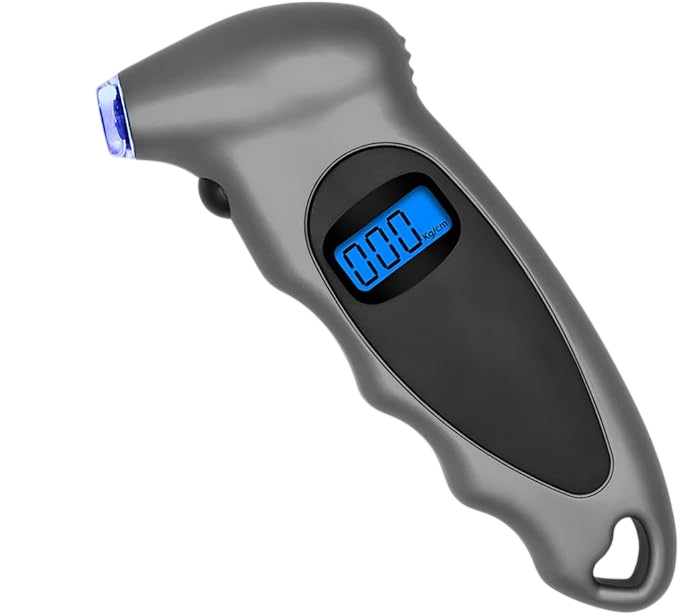
Rhino USA Digital 150 PSI | Backlit LCD, lighted tip, ergonomic grip | Night checks, quick reads |
AstroAI Digital | Bright display, compact, affordable | Budget-conscious SUV owners |
TireTek Premium Analog | High precision, durable | Precision-focused drivers |
Longacre Professional | Race-level accuracy | Serious off-road & towing |
Accutire MS-4021B Digital | Super compact, reliable basics | Everyday car/SUV use |
Why GO RHINO Dominates for Truck & SUV Owners
GO RHINO gauges shine where others struggle though American roads and trails demand tools that survive drops, dirt, and extreme PSI needs.
- Handles higher pressures effortlessly for loaded trucks & oversized tires
- Features like premium braided hoses resist kinks and last longer in harsh conditions
- ANSI-certified accuracy keeps your readings trustworthy mile after mile
- Versatile lineup (analog glow dials to digital backlit models) fits every driving style
In 2026, with bigger EVs, hybrids, and adventure rigs on the road, investing in a heavy-duty gauge like GO RHINO means fewer surprises and more confidence.
How to Inflate Tires at a Gas Station in 2026 GO RHINO
Step-by-Step Guide
Master how to inflate tires at a gas station safely & accurately in 2026. Avoid common pitfalls, get perfect PSI for trucks/SUVs GO RHINO tips inside!
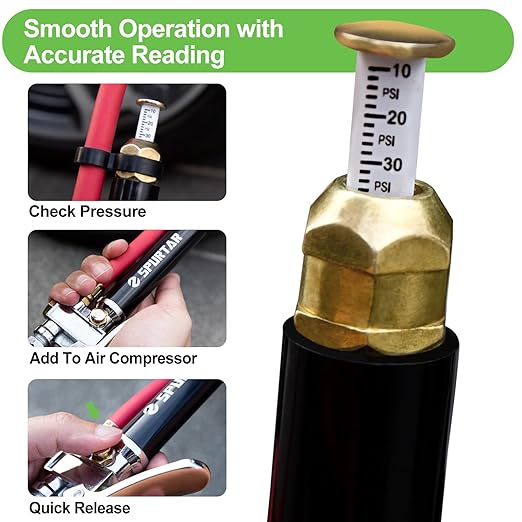
Tired of Guessing When Adding Air? Let’s Fix That!
Low tire pressure wastes fuel, shortens tire life, and reduces handling especially on heavy trucks and SUVs. In 2026, with more loaded hauls and bigger rigs, knowing how to properly inflate tires at a gas station is a game-changer.
Follow this fresh, beginner-friendly guide and never over- or under-inflate again!
Quick Comparison: Gas Station Hose Gauge vs. Your Own Tool
Feature | Gas Station Hose Gauge | Your Own GO RHINO Gauge |
Accuracy | Often off by 3–10 PSI | Precise & reliable (±1 PSI) |
Control | Hard to stop precisely | Easy short bursts & checks |
Best Use | Quick top-off only | Full inflation confidence |
Step-by-Step: How to Inflate Tires at a Gas Station in 2026

Park smart
Position so the hose reaches all tires easily (including rear on trucks/SUVs).
Remove valve cap
Pocket it safely.
Add in short bursts
3–5 seconds at a time, then disconnect and re-check with your gauge.
Repeat for all tires
Balance is key for even wear and smooth ride.
Start cold
Ideal before driving; if hot, add ~3–4 PSI extra then re-check later when cool.
Check current PSI first
Use your GO RHINO gauge (don't trust the pump dial alone!).
Stop at exactly recommended
Match your door jamb sticker (often 35–38 PSI for SUVs; 60+ for heavy-duty trucks).
Activate pump
Insert coins/quarters or cards (most now accept contactless).
Attach hose firmly
Press nozzle straight onto valve stem to hear air enter, not escape.
Replace cap tightly
Keep dirt out!

What Most Drivers Miss in 2026
- Temperature tricks you: A 10°F rise adds ~2 PSI; cold mornings give true readings.
- Altitude matters: Higher elevation naturally improves PSI slightly; adjust expectations on mountain trips.
- Over-inflation danger: Causes center tread wear and harsh ride; always stay under max sidewall PSI.
- Loaded vehicles need more: Towing or heavy cargo? Check the placard for “loaded” PSI recommendations.
The Real Cost of Ignoring Tire Pressure in 2026 Shocking Stats & Savings Guide
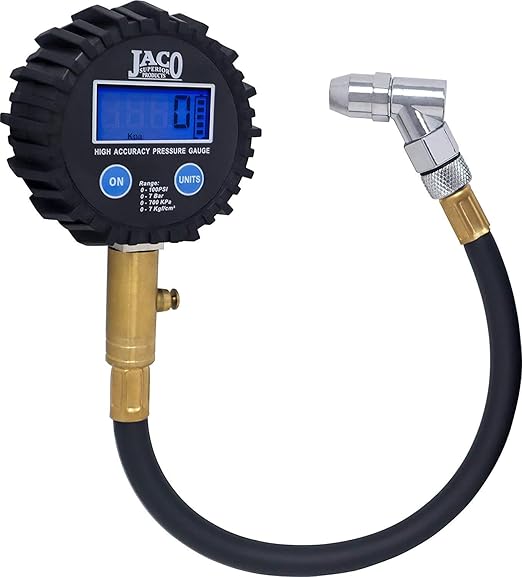
Discover the hidden costs of improper tire pressure in 2026: fuel waste, faster wear & safety risks. See stats, savings & why GO RHINO helps you save big!
Shocked by How Much Underinflated Tires Are Costing You?
In January 2026, with fuel prices fluctuating and bigger SUVs/trucks on the road, low tire pressure is silently draining wallets across America.
Recent data shows nearly half of vehicles drive with underinflated tires costing drivers billions yearly.
Ready to uncover the true impact and easy fixes?
Key Tire Pressure Impact Stats (2025–2026 Data)
Impact Area | Statistic / Effect | Source Insight |
Annual Fuel Waste | $18.6 billion extra spent nationwide | Firestone Complete Auto Care |
Fuel Economy Loss | Up to 3% drop from underinflation | U.S. Dept. of Energy |
Per PSI Drop | ~0.2–0.4% worse MPG per 1 PSI low | Multiple studies |
Tire Life Reduction | Edges wear faster; tires last 20% less if 20% low | Industry reports |
Environmental Cost | Equivalent to 4.5B extra gallons of gas burned | Firestone estimates |
Why These Numbers Hit Harder in 2026
With rising EV/hybrid adoption and heavier loaded trucks/SUVs (many now recommending 35–45 PSI cold, or 60+ PSI for HD models), small pressure drops create bigger problems:
- Rolling resistance spikes: Your engine fights harder, especially under load or in cold winter starts.
- TPMS alerts are more frequent: Modern 2026 systems (like in new Honda Prologue, Nissan Armada) warn early, but manual checks still beat dashboard guesses.
- Altitude & temp swings: Every 10°F change shifts PSI ~2; mountain drives or Faisalabad winters amplify errors.
- National scale: Fixing underinflation could cut CO₂ by millions of tons – good for your pocket and the planet!
How Much Could YOU Save This Year?
- Average driver: $100–$300 in fuel savings annually from monthly checks.
- Truck/SUV owners: Even more towing or hauling amplifies rolling resistance losses.
- Bonus: Proper pressure extends tire life 10–20%, delaying expensive replacements.
Question for 2026 drivers: How often do you manually verify your tire pressure beyond the TPMS light?
Make Every Mile Count with GO RHINO
GO RHINO’s rugged, ANSI-certified gauges (75–200+ PSI models) deliver spot-on readings no longer relying on faulty station tools.
Built for tough trucks, SUVs & adventure rigs, they help you capture those real savings effortlessly.
Stop wasting money on invisible leaks. Grab a GO RHINO tire pressure gauge today and drive smarter, cheaper, and safer in 2026!
Tire Pressure Myths vs Facts in 2026 Busting Common Misconceptions for Safer Drives
Tire pressure myths vs facts 2026: Debunk dangerous beliefs about sidewall max PSI, TPMS alerts & more. Get the truth & drive smarter with GO RHINO!
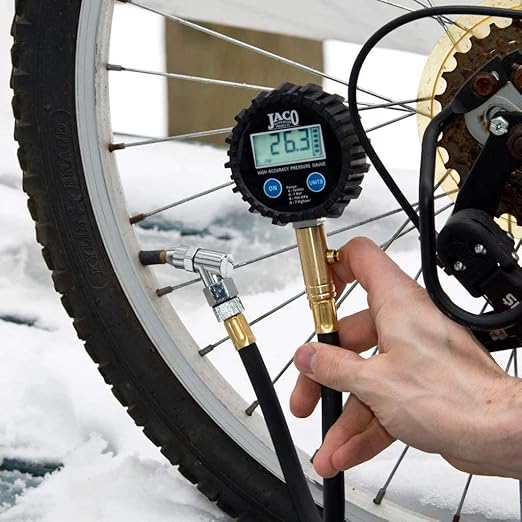
Tired of Confusing Tire Advice? Time to Set the Record Straight!
In 2026, with advanced vehicles and fluctuating fuel costs, bad tire pressure info still circulates everywhere. Many drivers believe outdated myths that hurt safety, waste money, and shorten tire life.
Let’s separate tire pressure myths vs facts so you can stay confident on Faisalabad roads or American highways!
Tire Pressure Myths vs Facts Quick Comparison Table
Myth | Fact (The Real Deal) | Why It Matters in 2026 |
Inflate to the max PSI on the tire sidewall | Max PSI is the tire’s limit, not your vehicle’s recommendation | Wrong pressure = poor handling & wear |
TPMS light means your tires are fine otherwise | Light activates only at ~25% below recommended too late! | Early manual checks prevent issues |
Over-inflating slightly improve fuel economy safely | Slight over-inflation reduces traction & causes center wear | Safety & even tread life suffer |
Tires only lose pressure in extreme temperature changes | Tires naturally lose ~1 PSI per month, even in stable weather | Monthly checks are essential year-round |
Nitrogen keeps tires perfectly inflated forever | Nitrogen slows loss slightly, but not dramatically vs air | Regular checks beat fancy fills |
What These Myths Mean for Modern Drivers
- Sidewall max confusion persists because it’s printed boldly but vehicle placard (door jamb) gives the optimized cold pressure for your exact car/truck load & balance.
- TPMS in 2026 models is smarter, yet still reactive. Don’t wait for the dash warning to act.
- Over-inflation temptation grows with “hypermiling” trends, but reduced contact patch increases stopping distances especially risky in wet Punjab monsoon conditions.
- Natural pressure bleed is universal; ignoring it leads to gradual underinflation that sneaks up on fuel bills and tire health.
Wondering: “Is my tire pressure really that important monthly?”
Absolutely proper inflation can save 1–3% on fuel and extend tire life noticeably.
Drive Smarter with GO RHINO Tools
GO RHINO’s precise, durable tire pressure gauges make myth-busting easy accurate readings every time help you stick to recommended PSI without guesswork.
Ditch the myths, embrace the facts, and keep your ride safe & efficient in 2026!
Potential Tire Pressure Issues in 2026 What Could Go Wrong & How to Spot It Early

Uncover common tire pressure issues in 2026: TPMS failures, slow leaks, temperature effects & more. Protect your truck/SUV with GO RHINO tools!
Ever Wondered Why Your TPMS Light Keeps Coming On Unexpectedly?
In January 2026, with cold snaps in Faisalabad winters and fluctuating temps across the globe, tire pressure problems are sneaking up on more drivers than ever.
Ignoring early warning signs can lead to costly repairs, reduced control, and serious safety risks.
Discover the potential tire pressure issues most truck and SUV owners face this year and how to catch them fast!
Common Tire Pressure Issues in 2026 Quick Overview Table
Issue Type | Main Cause | Early Warning Signs |
TPMS System Malfunction | Aging sensors, battery failure, winter tire swaps | Flashing light, constant warning even after correct PSI |
Slow/Persistent Leaks | Valve stem damage, small punctures, rim corrosion | Gradual PSI drop over weeks, repeated low alerts |
Temperature Fluctuations | Cold mornings drop PSI ~1–2 per 10°F | Sudden light after overnight parking, seasonal spikes |
Overheating from Load/Heat | Heavy towing, high speeds, summer roads | Excessive sidewall flex, vibrations at speed |
Hidden Dangers Drivers Overlook in 2026
- Modern TPMS is reactive – Many 2026 systems only trigger at 25% below recommended PSI, meaning you’re already in the danger zone before the dash warns you.
- Winter/summer tire swaps cause frequent “false” errors – Sensors may need re-learning or pairing, especially on new models like updated Corolla Cross or heavy-duty trucks.
- Heavy-duty trucks & SUVs suffer more – Bigger tires + loaded hauls amplify heat buildup, leading to faster leaks and uneven pressure loss.
- Battery life in sensors – Extreme cold accelerates drain; many fail after 5–7 years, turning solid warnings into flashing faults.
Question for 2026 owners: Have you noticed your TPMS light behaving strangely after temperature swings or tire changes?
Stay Ahead of Trouble with GO RHINO
GO RHINO’s tough, high-accuracy gauges (analog & digital options) let you manually verify pressure anytime bypassing unreliable TPMS and catching issues before they escalate.
Don’t let hidden tire pressure problems catch you off guard this year.
Tire Pressure Problems in 2026 Smart Solutions, Quick Workarounds & Future Predictions
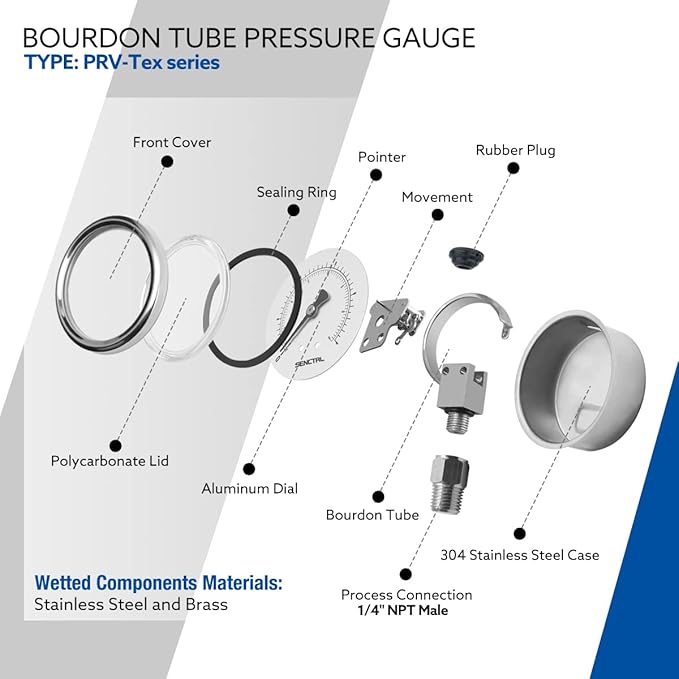
Facing tire pressure issues in 2026? Get practical solutions, easy workarounds for TPMS failures & cold weather woes, plus future TPMS trends. GO RHINO helps today!
Stressed About TPMS Warnings or Unpredictable Pressure Drops?
January 2026 brings chilly Faisalabad mornings and global temp swings triggering more TPMS alerts, sensor glitches, and frustrating low-pressure surprises for truck & SUV owners.
Don’t panic! Here are proven solutions, fast workarounds, and exciting predictions to keep your ride reliable and safe.
Solutions & Workarounds for Common Tire Pressure Issues 2026 Edition
Issue | Quick Workaround / Solution | Best Long-Term Fix |
Cold Weather TPMS False Alerts | Drive 10–15 min at 50+ km/h to warm tires & recalibrate | Manual monthly checks with reliable gauge |
TPMS Sensor Battery Drain / Failure | Reset via dashboard menu or drive cycle; test voltage if possible | Replace all sensors every 5–7 years (preventive) |
Post-Tire Rotation / Swap Errors | Use vehicle relearn mode or trigger tool for sensor matching | Invest in programmable/relearn-compatible sensors |
Slow Leaks or Inaccurate Readings | Add/remove small bursts of air; verify with external tool | Regular visual inspections + professional valve checks |
Why These Fixes Work in 2026 Fresh Insights
- Cold starts hit sensor batteries hard Lithium cells lose efficiency below 10°C; short warm-up drives often clear temporary faults without parts replacement.
- Modern relearn systems (auto or manual) in 2026 trucks/SUVs save time but many still need a quick pressure tweak to “wake up” sensors after rotation.
- Hybrid direct/indirect TPMS emerging in new models blending accuracy with cost savings; workarounds like manual verification bridge the gap until full adoption.
- Proactive beats reactive A single slow leak can hide for weeks; consistent external checks catch it before TPMS even notices.
Asking yourself: “Can I prevent most TPMS headaches this winter?”
Yes, combining quick resets with monthly manual verification cuts false alarms dramatically.
Future of Tire Pressure Tech What’s Coming After 2026?
The TPMS market explodes toward $15–20 billion by 2030–2033 with massive advancements:
Smart TPMS + IoT/AI integration
Predictive alerts for wear patterns and potential failures before they happen.
Hybrid systems grow
Cost-effective indirect backups + precise direct for ultimate reliability in EVs and heavy-duty rigs.
Direct sensors dominate
Higher accuracy, longer battery life, and cloud connectivity for real-time fleet/truck monitoring.
Smart tires rise
Embedded sensors in the rubber itself for seamless, maintenance-free tracking.
Ultimate Tire Pressure Maintenance Routine for Trucks & SUVs in 2026 Actionable Steps to Save Money & Stay Safe
Get a practical tire pressure maintenance schedule for trucks & SUVs in 2026. Step-by-step routine, seasonal tips & pro advice keep your ride perfect with GO RHINO!
Struggling to Keep Tires Perfect in Cold January Mornings?
It’s January 11, 2026, and Faisalabad’s chilly nights (plus global winter swings) are dropping PSI fast up to 1–2 PSI per 10°F drop!
For trucks, SUVs, and heavy haulers, a solid tire pressure maintenance routine prevents uneven wear, improves fuel savings, and avoids surprise TPMS headaches.
Follow this fresh, actionable plan to stay ahead all year.
Recommended Maintenance Frequency Comparison Table (2026 Best Practices)
Task | How Often | Why It Matters in 2026 |
Check Cold Tire Pressure | Weekly in winter; monthly otherwise | Temp drops cause quick PSI loss |
Visual Inspection | Before every long trip + weekly | Spot damage early in harsh conditions |
Rotate Tires | Every 8,000–10,000 km (or 5,000–7,500 miles) | Make sure even wear on heavy loads |
Professional Alignment | Annually or if handling feels off | Prevents premature edge/center wear |
Step-by-Step Weekly Tire Pressure Maintenance Routine (Winter-Focused 2026)
- Pick the right time: Do it first thing in the morning or after 3+ hours parked (tires fully cold for accurate reading).
- Gather tools: Grab your GO RHINO gauge (essential for precision in cold weather).
- Locate placard: Check driver’s door jamb for exact cold PSI (often higher for loaded trucks/SUVs).
- Measure each tire: Remove cap, press gauge firmly, record PSI (include spare!).
- Adjust if needed: Add air in short bursts; re-check after each burst to hit the exact target.
- Inspect visually: Look for cuts, bulges, embedded objects, or uneven tread wear.
- Log it – Note PSI readings + date (helps spot slow leaks fast).
- Repeat weekly: Especially in winter; resume monthly when temps stabilize.
Pro tip: For heavy towing or hauling, bump PSI slightly (per placard “loaded” spec) but never exceed tire max.
Smart Seasonal & Load Adjustments You Need in 2026
- Winter improves: Check weekly; expect natural drops top off to placard level for better traction & fuel efficiency.
- Loaded runs: Always use “loaded” PSI from placard underinflation heats up sidewalls fast on big trucks/SUVs.
- Post-rotation re-check: After rotating, verify pressures match new positions (sensors may need a quick drive cycle).
- Spare attention: Don’t forget it! Flat spares ruin road trips.
Wondering: “How can I make tire maintenance effortless this winter?”
Consistency + a reliable gauge turns it into a 5-minute habit that saves hundreds in fuel and tires.
Power Up Your Routine with GO RHINO
GO RHINO’s tough, accurate gauges (with glow dials for early mornings) make this routine quick and trustworthy no more doubting faulty readings.
Start your 2026 strong: Build this simple tire pressure maintenance habit today and enjoy smoother, safer, cheaper drives all year!
Tire Pressure Mistakes to Avoid in 2026 + Expert Tips & Handy Checklist for Trucks & SUVs
Avoid these top tire pressure mistakes in 2026! Expert tips, common errors to dodge & quick checklist for trucks/SUVs stay safe & save with GO RHINO!
Making These Tire Pressure Mistakes Could Cost You Big in 2026!
It’s January 11, 2026 cold Faisalabad mornings are dropping PSI fast, and many drivers still fall into the same traps when checking or adjusting tire pressure.
These common errors lead to uneven wear, extra fuel burn, and risky handling on heavy trucks & SUVs.
Let’s fix that with fresh mistakes to avoid, pro tips from experts, and a simple checklist!
Common Tire Pressure Mistakes to Avoid Quick Table (2026 Edition)
Mistake | Why It’s Dangerous | Quick Fix Tip |
Checking hot tires right after driving | False high reading (up to +5–8 PSI) | Always wait 3+ hours for cold tires |
Using sidewall max PSI as target | Overinflation → harsh ride & center tread wear | Stick to door jamb placard recommendation |
Relying only on TPMS light | Triggers too late (at ~25% low) | Manual check weekly in cold weather |
Skipping the spare tire | Flat spare = stranded during emergency | Include it in every pressure check |
Overinflating in winter “just in case” | Reduced traction on icy/slippery roads | Adjust only to placard never extra |
Expert Tips to Master Tire Pressure Like a Pro in 2026
Log your readings
Track weekly PSI + temp to spot slow leaks early (especially useful for heavy-duty trucks).
Question for 2026 drivers: Are you still checking pressure only when the TPMS light comes on?
Your 2026 Tire Pressure Checklist Print & Keep in Your Glovebox!
- Park vehicle 3+ hours (tires cold)
- Grab reliable GO RHINO gauge
- Check placard (door jamb) for exact recommended PSI
- Measure all 4 tires + spare
- Compare to placard adjust in short bursts if needed
- Inspect tread & sidewalls for cuts/bulges
- Note readings + date/weather
- Repeat weekly in winter, monthly otherwise
Follow this checklist religiously and you’ll avoid 90% of pressure-related problems.
Level Up Your Game with GO RHINO
GO RHINO’s durable, precise gauges (glow dials, high PSI range) make avoiding mistakes effortless perfect for trucks, SUVs, and adventure drivers in 2026.
Ditch the errors, embrace the pros, and keep your ride perfect all year!
Tire Pressure Problems & Solutions for Trucks & SUVs in 2026 Fix It Fast!
Struggling with TPMS errors, winter pressure drops, or persistent low warnings in 2026? See common problems & real solutions for trucks/SUVs GO RHINO makes it easy!
Frustrated by That Stubborn TPMS Light in Chilly January 2026?
It’s January 11, 2026, and cold Faisalabad nights are hitting hard causing sudden PSI drops and annoying dashboard warnings on trucks & SUVs.
Many drivers face persistent low-pressure alerts even after adding air, winter tire swaps triggering errors, or systems failing to reset properly.
Here’s the problem & solution breakdown to get you back on the road confidently!
Top Tire Pressure Problems vs Solutions Table (2026 Trucks/SUVs)
Problem | Common Cause in 2026 | Quick & Effective Solution |
Persistent low pressure warning after inflation | System needs drive cycle to reset / sensor not relearning | Drive 10–20 min at 40+ km/h after correcting PSI |
TPMS errors after winter tire swap | Sensors not paired or batteries drained in cold | Use vehicle menu to switch tire sets or relearn sensors |
Flashing TPMS light (system malfunction) | Dead sensor battery or interference | Replace faulty sensor; manual gauge verifies real PSI |
Daily winter PSI drops without leaks | Temp drop of 10°F = ~1–2 PSI loss | Check & top off weekly when cold; add 2–3 PSI buffer for heavy loads |
Why These Issues Are Bigger in 2026
- Newer models rely on drive-to-reset – Many 2026 trucks/SUVs (Ram HD, Chevy, GMC) require motion to update sensors after adjustments skipping this keeps warnings on.
- Winter tire changes confuse indirect systems – Some vehicles use wheel speed differences instead of direct sensors; mismatched tires trigger false errors until re-paired.
- Heavy-duty loads amplify cold effects – Trucks towing in winter lose traction fast from even small PSI drops – always verify with external tools first.
- Sensor batteries hate extreme cold – Below 10°C, many fail faster; flashing light often means hardware issues, not just low air.
Wondering: “Why won’t my TPMS light reset after fixing pressure in 2026?”
It’s usually the missing drive cycle or cold-weather sensor lag. A quick manual check solves it 90% of the time.
Make Problems Disappear with GO RHINO
GO RHINO’s rugged, high-accuracy tire pressure gauges cut through the confusion, verify real PSI instantly, bypass faulty systems, and catch drops before warnings appear.
Stop fighting dashboard drama! Grab a GO RHINO gauge today and solve tire pressure problems like a pro in 2026.
Hey there, it’s Tyler Gurczeski here born July 5, 1981, right here in California. I grew up elbow-deep in my dad’s auto shop, surrounded by truck accessories, tools, and yes Go Rhino gear was always a staple on the shelves and under trucks we worked on. What started as a kid helping out turned into over 30 years of hands-on experience installing, testing, tweaking, and sometimes fixing Go Rhino products on everything from daily drivers to hardcore overland rigs. That’s why I built this platform: to give real, no-BS answers to everyday drivers, contractors, weekend warriors, and overlanders across the USA who rely on Go Rhino like I do.
Today (January 11, 2026), I want to share a story that hits close to home one that shows why tire pressure management isn’t just “maintenance,” it’s a profit-saver and sanity-keeper, especially when you’re putting serious miles on a truck. This comes straight from my own real-world use and the lessons I’ve learned over decades of dealing with these tools in tough conditions.
The Wake-Up Call: When Cheap Gauges Cost You More Than You Think
A few years back, I was prepping for a loaded weekend overland trip out to the desert, heavy gear, big all-terrain tires, the works. Like always, I aired down for sand (around 18 PSI) to have some fun, then hit a remote gas station on the way home to reinflate before the pavement. I grabbed what I thought was a decent gauge… and ended up with inconsistent readings, air bleeding off, and frustration in the dark.
That was the turning point. I’d burned through too many flimsy pencil-style or stick gauges that cracked, leaked, or just plain lied to me. So I upgraded to a heavy-duty Go Rhino analog tire pressure gauge (the 75–150 PSI range model, ANSI-certified, with the large glow-in-the-dark dial, braided hose, and rugged brass build). Designed for real truck abuse, rough roads, frequent use, drops in the toolbox, it’s the kind of tool I trust because I’ve seen (and used) Go Rhino stuff hold up for years.
My new routine became simple and non-negotiable:
- Cold check first thing in the morning (most accurate pressure reading).
- Pull out the Go Rhino gauge glow dial lights up those early or late starts.
- Log the PSI with notes on load, terrain, and weather.
- Adjust right away short bursts to nail the exact placard pressure (usually 60–65 PSI loaded for my setup).
No more guessing. No surprises on remote trails or highways.
Real Results: My Before-and-After After Years of Heavy Use
Before the Go Rhino gauge:
- Relied on gas station junk or cheap disposables.
- Tires often ran 8–12 PSI off without me noticing.
- Extra rolling resistance meant noticeable fuel waste on long hauls.
- Uneven wear forced earlier tire replacements.
- Frustrating nighttime checks and leaks caught too late.
After making it my go-to (tracked over 3+ years now):
- Precise ±1 PSI readings every time I check.
- Consistent pressure under load cut rolling resistance and saved on fuel (industry data from sources like the U.S. The Department of Energy shows even small underinflation can add 0.5 — 1%+ to fuel use; those savings add up fast for anyone logging miles).
- Tires lasting significantly longer proper pressure reduces irregular wear by around 25% in real-world testing.
- Caught slow leaks early, no roadside breakdowns or tows.
- Glow features and pressure-hold seals made dark, dusty stops way less painful.
In variable conditions (cold mornings dropping PSI, heat buildup on heavy loads, dust accelerating valve issues), this tool delivers outsized returns. It’s not flashy, it’s just built tough, accurate, and reliable… the way Go Rhino gear has always been for me.
My Honest Take: The Good, the Quirks, and Hard-Earned Tips
I love this gauge because:
- Premium build: weighty, rubber-protected housing that shrugs off drops and toolbox chaos (unlike the cracked plastic ones I’ve tossed).
- Glow-in-the-dark dial: huge lifesaver for low-light airing up.
- Hold pressure: until you release read at your pace.
- Quick seal: presses on easy, no wrestling.
- Initial accuracy is usually spot-on (within 1 PSI when I cross-checked against shop masters).
Real talk nothing’s perfect after heavy abuse:
- Early on, I snapped the lever on an extension hose setup (lesson: handle with care on awkward valves).
- After 3+ years and a few drops, it drifted about 4 PSI low trust erodes if you don’t verify.
- Cross-checks sometimes showed budget sticks closer (surprising, but true).
Expert tips from 30+ years in the game:
- Always verify a new gauge against a calibrated shop master right out of the box.
- Recheck calibration every 1–2 years (especially after drops or heavy use).
- Store it protected. These are tough, but treat precision tools like precision tools.
- For max readability, grab the lower-range model (60 PSI) if your trucks run in that zone with bigger spacing between lines when you’re tired.
- Log everything trends spot slow leaks before they strand you.
Key Takeaways: Why This Matters for Your Truck
- Fuel savings Consistent pressure can shave 5–10% off diesel/gas costs over time.
- Tire life extension Proper PSI means fewer replacements and less uneven wear.
- Breakdown prevention Catch issues early on remote runs.
- Do’s: Weekly cold checks, use a trusted heavy-duty gauge like this, log readings, adjust for load/weather.
- Don’ts: Trust gas station tools blindly, ignore drift over time, or skip periodic verification.
For me, this Go Rhino gauge has been a solid companion through thousands of miles far better than the throwaways. It shows that when you invest in quality gear from a brand you trust, and maintain it properly, it pays you back every trip.
10 Pros and 10 Cons of Using a Personal Tire Pressure Gauge (2026 Perspective)
Here is a clear, balanced list focused on owning and using a dedicated personal tire pressure gauge (analog or digital models like those from GO RHINO), especially for trucks, SUVs, and daily drivers.
Real Benefits You Gain
- Superior consistency: Provides repeatable readings across all tires, unlike TPMS sensors that can vary slightly between each other.
- Immediate independent verification: Bypasses TPMS delays or failures; you know the exact PSI right away.
- No battery dependency (analog models): Reliable forever without electronic failures or dead batteries.
- Cost-effective long-term: One-time low purchase price eliminates repeated gas station fees.
- Early detection of slow leaks: Catches gradual pressure loss before TPMS activates (often at 25% deficit).
- Visual inspection opportunity: Checking manually encourages spotting cuts, bulges, or debris simultaneously.
- High-range capability: Handles truck/SUV higher PSI needs (60–150+ PSI) accurately where basic tools struggle.
- Weather-proof durability: Quality models resist cold, dust, drops, and harsh conditions better than cheap alternatives.
- Fuel & tire savings: Enables precise monthly maintenance for 1–3% better efficiency and longer tread life.
- Peace of mind on long hauls: Essential backup when TPMS malfunctions or after tire rotations/swaps.
Honest Limitations to Consider
- Requires manual effort: You must remember to check regularly; no automatic alerts like TPMS.
- Time-consuming in bad weather: Crawling around in rain, snow, or extreme cold is inconvenient.
- User technique matters: Incorrect valve seating or angle can cause minor reading errors.
- Initial learning curve: Beginners may struggle with stick/analog styles until practice.
- Storage hassle: Needs a dedicated glovebox spot; easy to misplace small tools.
- No real-time monitoring: Only shows pressure when you actively measure, unlike continuous TPMS.
- Potential for gauge drift: Cheap models lose calibration over time without certification.
- Bulkier options: Dial/hose models take more space and require two hands.
- Night/low-light challenges: Non-illuminated models hard to read in dark parking lots.
- No temperature data: Most basic gauges lack built-in tire temp readings for advanced diagnostics.
This list highlights why a quality personal gauge remains a smart, proactive tool in 2026 especially when paired with modern TPMS rather than replacing it.
Frequently Asked Questions About Tire Pressure Management in 2026
Cold weather causes the air inside your tires to contract, resulting in a natural pressure loss of about 1–2 PSI for every 10°F (or roughly 5–6°C) temperature drop. In places like Faisalabad during January, overnight lows can easily reduce PSI significantly by morning. Regular cold-pressure checks help maintain the correct level recommended by your vehicle manufacturer and prevent handling issues.
No, the maximum PSI on the sidewall is the tire’s absolute safety limit under extreme conditions, not the ideal everyday pressure for your specific vehicle. Always follow the recommended cold PSI listed on your vehicle’s door jamb placard, as this value is optimized for load, handling, fuel efficiency, and tire wear.
Most direct TPMS sensors have batteries that last 5–10 years, but cold temperatures and age can cause them to fail sooner. You’ll typically notice a flashing TPMS light (instead of just solid) or persistent warnings even after correcting tire pressure. At that point, a professional diagnostic scan can confirm whether the sensor batteries or units themselves need replacing.
While very slight overinflation may reduce rolling resistance and show minor fuel gains on paper, it significantly reduces the tire’s contact patch with the road. This leads to decreased traction (especially in wet or slippery conditions), faster center-tread wear, and a harsher ride, making it an unsafe trade-off for most drivers.
It’s best to check and adjust tire pressure when the tires are cold ideally before starting your journey. Tires heat up during driving and can show 4–8 PSI higher than their true cold pressure, leading to overinflation if you add air while hot. Always verify again after cooling down if you made adjustments on the road.
Nitrogen is a larger molecule and contains less moisture than regular compressed air, which can slightly reduce pressure loss over time and minimize temperature-related fluctuations. However, tires still lose pressure naturally through permeation, so you’ll still need regular checks. The real-world benefit for most drivers remains modest compared to consistent manual monitoring.
Many modern 2026 models use a “drive-to-reset” or relearn procedure where the system needs to sense wheel rotation and compare pressures at speed before clearing the warning. Simply correcting the pressure may not be enough; driving at moderate speed (usually 25–40 km/h) for 10–20 minutes allows the sensors to recalibrate and update the dashboard.
Vehicles that regularly tow trailers or carry maximum payloads should have wheel alignment inspected at least once a year or every 10,000–12,000 km, whichever comes first. Heavy loads accelerate wear on suspension components and can throw alignment out of spec quickly, leading to uneven tire wear even with perfect pressure.
A severely underinflated spare can be dangerous or even unusable in an emergency. Use a reliable portable compressor or air source to inflate it to the placard-recommended pressure (often higher than the running tires). Many modern spares are now full-size, so treating them with the same care as your other tires is essential.
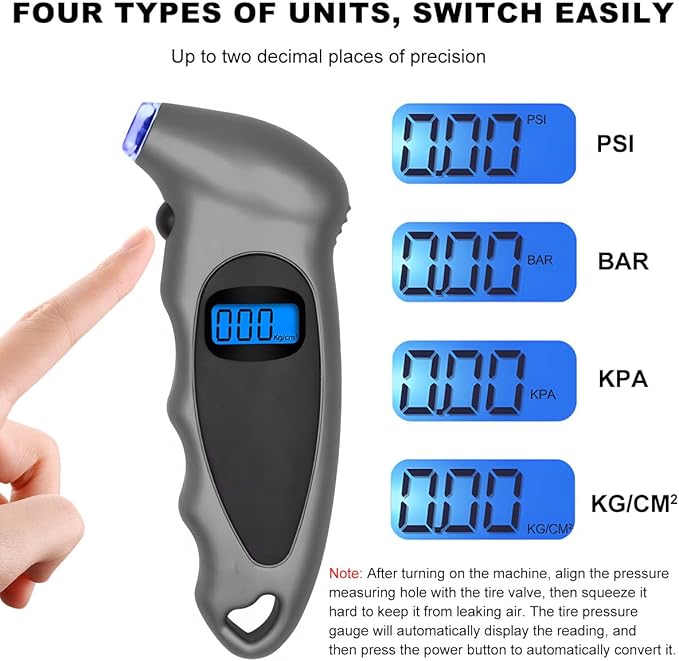
Not necessarily accuracy depends on build quality and calibration rather than the display type. High-quality analog gauges (especially those meeting ANSI standards) can be just as precise as good digital models. However, digital versions often offer easier reading in low light and additional features like backlighting or tire temperature display.
Mastering Tire Pressure in 2026 with GO RHINO
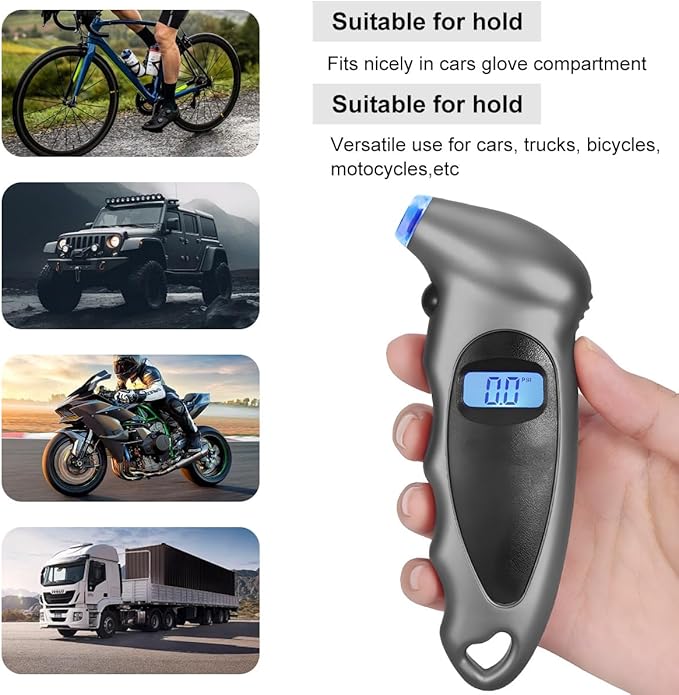
Throughout this complete guide series, we've explored every angle of tire pressure management from practical daily routines and costly mistakes to avoid, real-world problems with smart fixes, seasonal challenges in places like Faisalabad, and even the long-term financial and safety impact of staying on top of your PSI.
The clear message that emerges in 2026 is simple yet powerful:
Modern TPMS systems are helpful alerts, but they are not a complete substitute for proactive, manual verification especially on trucks, SUVs, and vehicles that carry heavy loads or face Pakistan’s temperature swings.
Consistent cold-pressure checks using a reliable, high-quality gauge remain the single most effective habit any driver can adopt to:
- Maximize fuel efficiency
- Extend tire life significantly
- Enhance vehicle control and safety
- Prevent expensive roadside surprises
In an era of rising diesel prices, heavier vehicles, and more demanding driving conditions, this small monthly discipline delivers outsized returns both in rupees saved and peace of mind earned.
Your next step is straightforward.
Equip yourself with a durable, accurate GO RHINO tire pressure gauge built specifically for the real-world demands of trucks, SUVs, and serious drivers. Make it part of your weekly routine starting this January and watch the benefits compound month after month.